Inactivation of the VHL tumor suppressor gene is linked to the development of several different tumor types in humans, including hemangioblastomas of the retina and central nervous system, clear cell renal carcinoma, pancreatic cysts, pheochromocytoma.
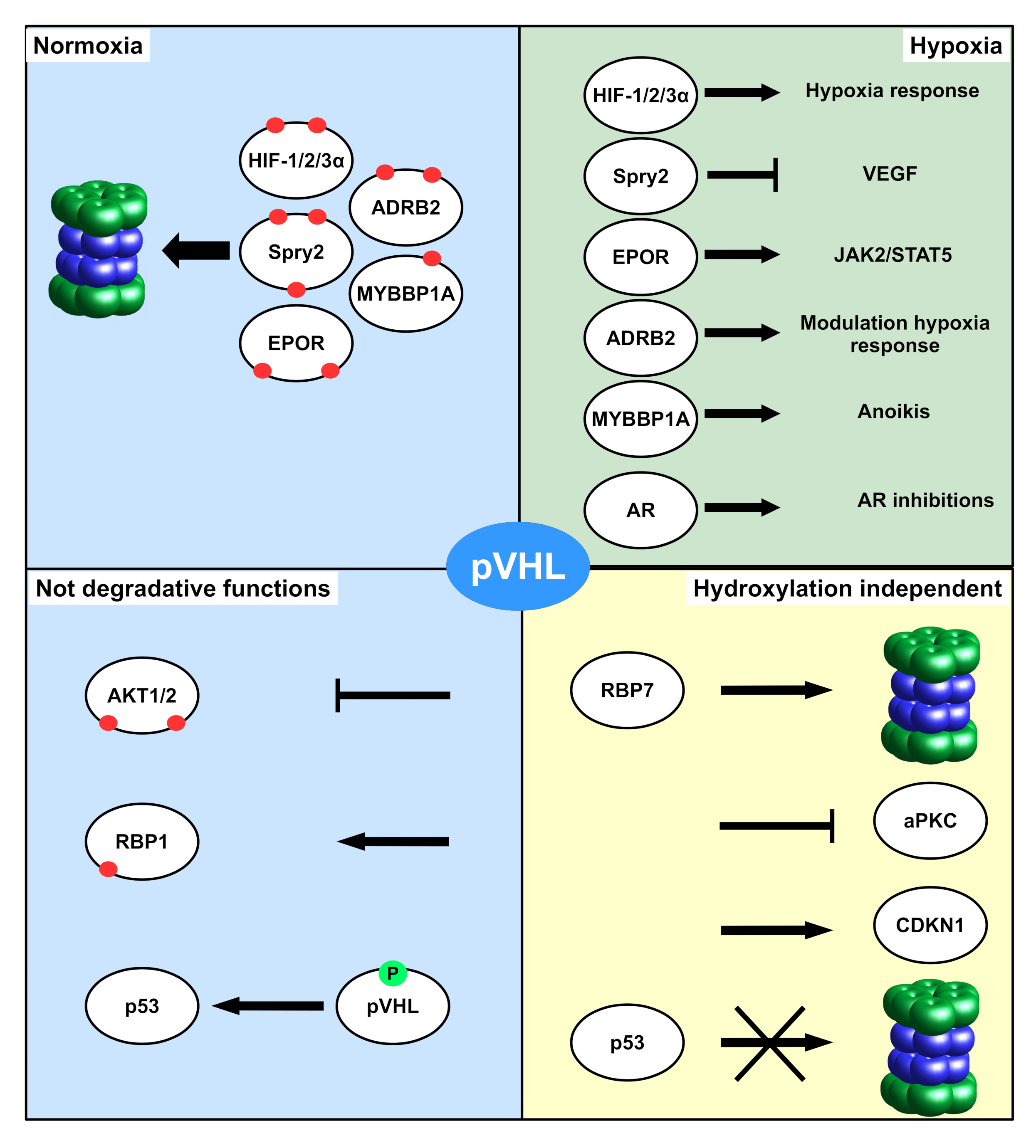
Biochemical studies revealed that pVHL interacts with several different proteins serving as a multipurpose adaptor protein that engages in multiple protein-protein interactions to control diverse transcriptional-dependent and transcriptional-independent cellular processes.
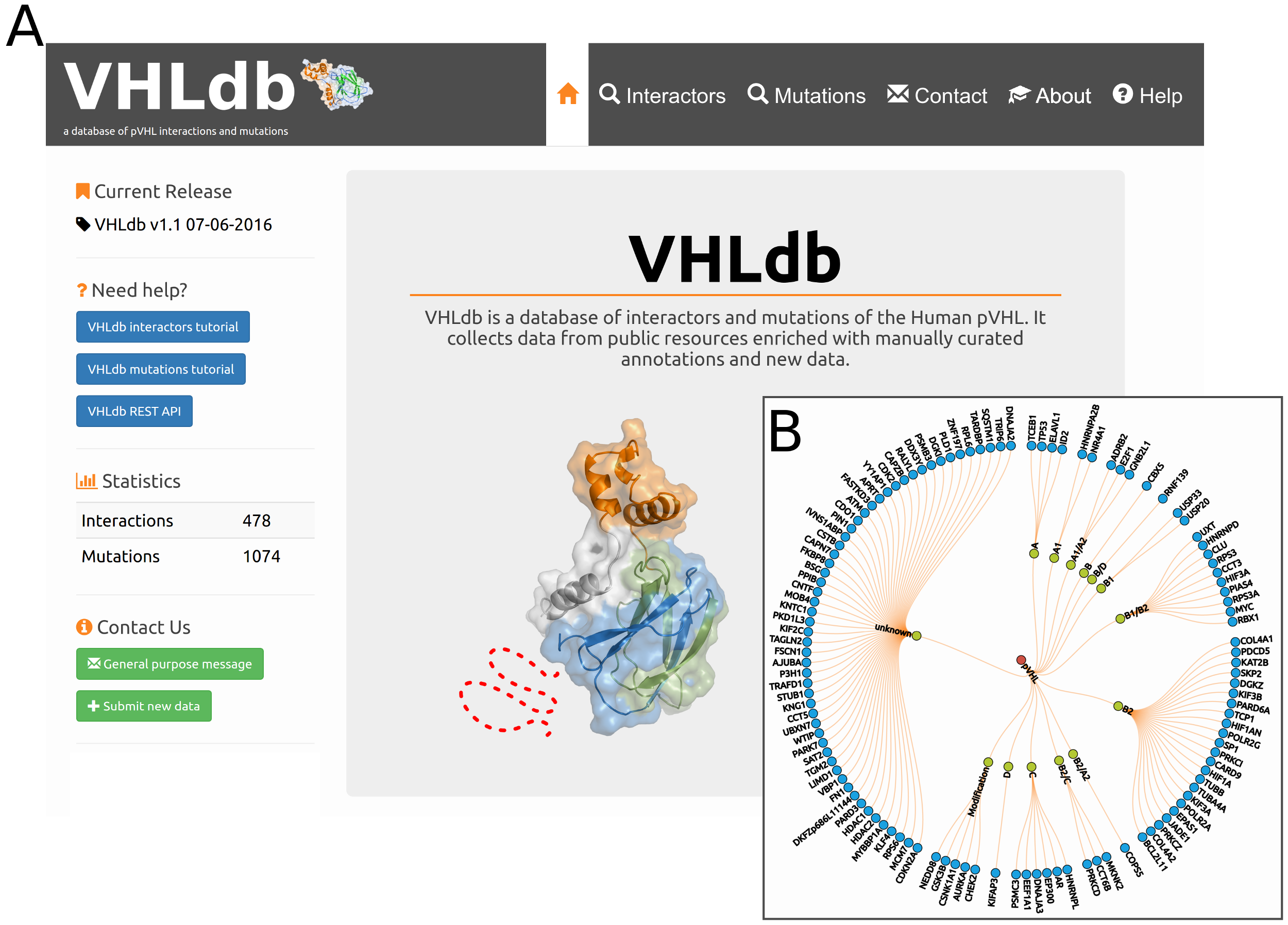
Most studies aimed at elucidating pVHL function have focused on the identification and functional analysis of interacting proteins. A list of over 500 interactors is present in the VHLdb database and for a number of these the pVHL interacting regions have been identified.
Using structural information we have proposed at least four distinct pVHL interacting interfaces that allowed us to validate interactions that have been found experimentally in a complex, to predict new protein interactions, to determine which interactions are compatible with each other and which interactions are exclusive. We can speculate that the alteration of a particular pVHL interface affects, in different time and space, specific modules of the global interactions network created with experimentally identified pVHL interactors.
The study of the functional effect of mutations related to a specific interface in the context of a sub-network would allow us to understand at least partially how the loss of pVHL function affects the cell phenotype.
The study of the functional effect of mutations related to a specific interface in the context of a sub-network would allow us to understand at least partially how the loss of pVHL function affects the cell phenotype.
It also provides a more rational basis for deciding how to interfere with a pathway in order to study it or to treat a particular disease.
The experimental laboratory investigates how the tumor suppressor von Hippel-Lindau protein (pVHL) regulates cellular homeostasis through phase separation and protein aggregation, and how alterations in these processes contribute to tumor development. pVHL plays a central role in oxygen sensing by mediating HIF-1α degradation, yet emerging evidence suggests that its function extends beyond this canonical pathway. We are exploring the idea that pVHL can form biomolecular condensates and amyloid-like assemblies that modulate its activity, stability, and interactions with cellular partners.
By integrating structural, biophysical, cellular, and computational approaches, we aim to define how specific VHL isoforms and mutations influence the transition between soluble, dynamic, and aggregated states of the protein. In particular, we are studying how stress conditions such as hypoxia and acidosis, typical of the tumor microenvironment, reshape pVHL behavior and affect its ability to regulate proteostasis.
A deeper understanding of these mechanisms could reveal how aberrant phase separation of pVHL contributes to the pathogenesis of VHL-associated tumors, including clear cell renal cell carcinoma (ccRCC). Ultimately, our work seeks to identify novel molecular principles linking phase behavior to tumor suppression, and to open new therapeutic avenues for restoring physiological pVHL functions in cancer.
-

Francesco Gregoris
-

Emanuela Leonardi
-

Silvio C. E. Tosatto